Why Our Family Began Celebrating Hanukkah
As I continued studying the Maccabees, I also began learning about the traditions through which Jewish communities have observed Hanukkah across generations.
The earliest Maccabean accounts emphasize resistance, religious freedom, and the Temple’s rededication. The familiar account of a small amount of oil lasting eight days appears later in the Babylonian Talmud. Calling it a later rabbinic tradition does not make it unimportant; it became central to Jewish practice and to Hanukkah’s identity as a festival of lights.
These sources emphasize different parts of the story, and I did not need to decide which meaning Jewish communities should place first. My task was to listen, learn, and understand how the festival had been carried by the people to whom it belongs.
A Jewish Story of Courage and Faithfulness
The story spoke to me because it remembers Jewish people resisting pressure to abandon their identity, worship, and covenantal practices. It is a story of courage, survival, rededication, and the freedom to remain faithful.
As a Christian, I saw themes that invited personal reflection, but Hanukkah does not need a Christian interpretation to make it meaningful. It has its own integrity within Judaism and within the long memory of Jewish communities.
That distinction helped me approach it with greater humility. I was not discovering a forgotten story. Jewish people had never stopped carrying it. It was simply a story that our family was only beginning to hear.
Learning that changed my original question. Instead of asking, “How can we make this ours?” I began asking, “How can we learn from this story while honoring the community that preserved it?”
Rededicating Our Lives: A Christian Reflection
The New Testament uses Temple imagery when speaking about believers and the Christian community, including in 1 Corinthians 3:16 and 6:19. From that Christian perspective, the Temple’s rededication prompted me to think about the continual work of dedicating our own lives to God.
That was our application, not the definition of Hanukkah within Judaism. The historical Temple was not merely a metaphor, and the Jewish festival is not simply an illustration for Christian spirituality.
Still, the questions were meaningful to me: What have I allowed to become neglected? Where am I being asked to remain faithful under pressure? What does it mean to dedicate my choices, time, and home to God again?
Holding the distinction between Jewish meaning and Christian reflection made the lesson deeper, not more distant. It allowed us to respond honestly without replacing someone else’s story with our own.
A Respectful Family Practice
Hanukkah is not one of the appointed festivals listed in Leviticus 23. Even so, after learning with a Messianic community and studying Jewish sources, our family chose to create a Christian/Messianic home practice inspired by Hanukkah.
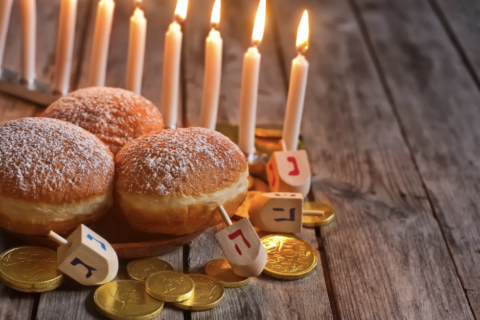
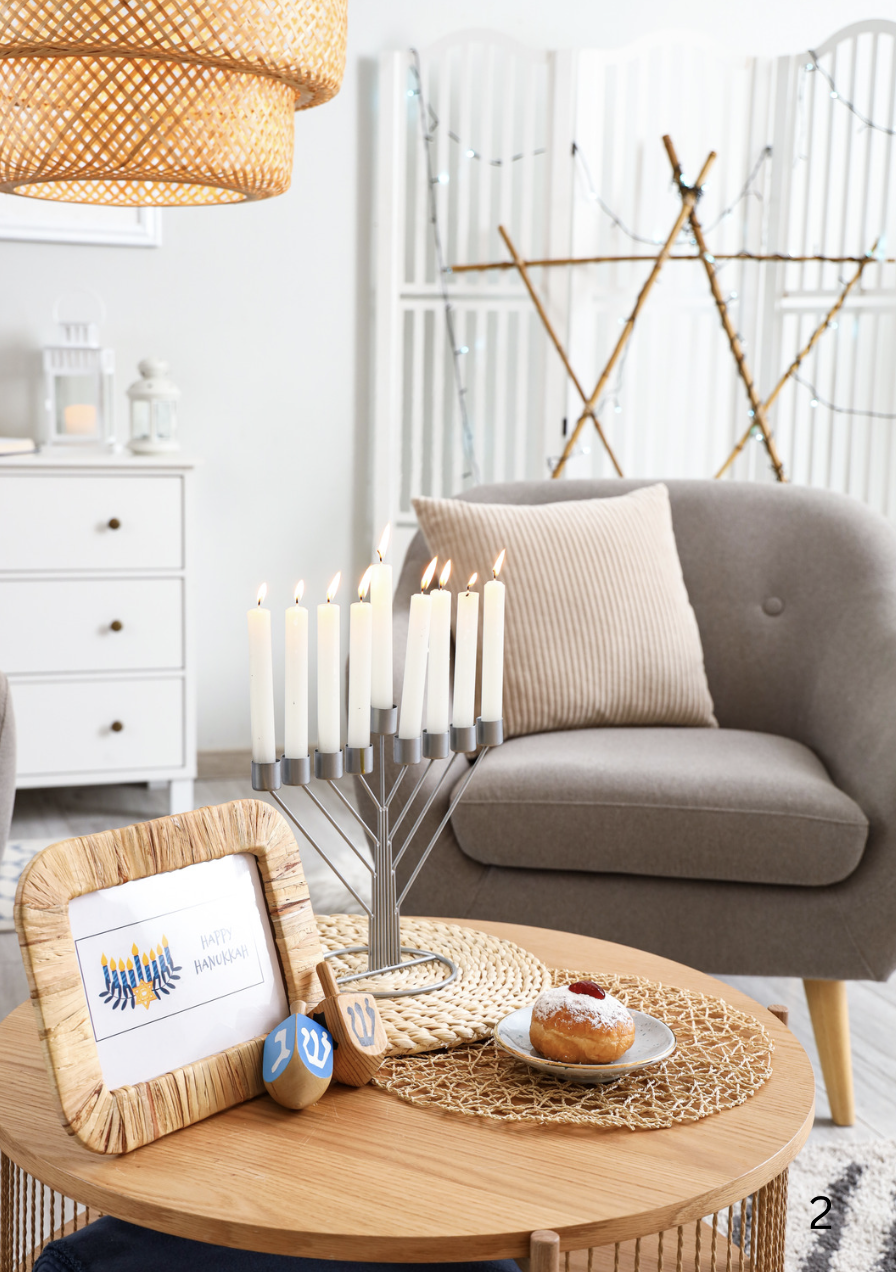
We learned terminology along the way. The seven-branched menorah is associated with the ancient Temple. A Hanukkah lamp has eight lights for the festival’s eight nights plus a ninth helper light, the shamash; it is often called a hanukkiah or Hanukkah menorah.
We learned about lighting practices, blessings, songs, foods, and games while remembering that Jewish customs vary across communities and families. We did not reproduce every practice or present ourselves as authorities. We identified our observance honestly as an adaptation shaped by our Christian faith and by what we had learned from Jewish and Messianic teachers.
For our family, the lights became an opportunity to remember courage, dedication, religious freedom, and the responsibility to remain faithful. The evenings gave us time to read, talk, and learn together.
Celebrating Hanukkah did not make us Jewish, nor did it give us ownership of the festival. It gave us an opportunity to honor a Jewish story, deepen our historical understanding, and examine our own lives with gratitude.
What had always been present in Jewish memory was new to us. Approaching it respectfully meant acknowledging that difference and remaining willing to listen.
How can learning another community’s sacred story deepen our understanding without turning that story into our possession?
Continue the Journey
Read Next: The Quiet Feast →