
Why Some Christians Follow the Biblical Clean and Unclean Food Laws
We continued attending the Messianic synagogue. The people were friendly, and after every Saturday service, they invited us to a lunch called Oneg. As an introvert with an extroverted personality, I didn’t anticipate enjoying it—I thought I’d just slip out quietly after service. But we kept staying. I learned that many in the congregation volunteered to bring food each week, creating a shared meal for everyone. Sitting down with others after the service, I found myself unexpectedly thankful to hear other people’s stories. We met people from all kinds of backgrounds and faith journeys. None of their stories were exactly like mine, but they all had one thing in common: they loved being there. The more we attended, the more direction we received. One day, they handed us a small black book called a siddur, which contained many of the prayers read aloud each week. I leaned over and told my husband, “We need to get one.” What amazed me most was how many people didn’t even need it—they had memorized the prayers. I was trying to be graceful with myself, but I still felt like I had so much to learn. Then came a sermon that marked a turning point. I didn’t expect it to come through a sermon on food, but it did. By this point, we had been attending the Messianic synagogue for a little while. I was still adjusting, still learning, stretching in ways I hadn’t anticipated. The services, the prayers, even the weekly lunch—everything still felt so new and unfamiliar. But then came one message. It was simple, clear, and deeply personal. And somehow, it touched something I had quietly carried in my heart for years without fully understanding.
It was about food, specifically, clean and unclean foods in Scripture.
For years, I had wondered about that in silence. I couldn’t shake the sense that just as there are good and bad words, there must also be good and bad foods. Deep down, I believed it mattered. That message stirred something so deep in me—it overwhelmingly broke my heart wide open—not in pain, but in tenderness, bringing me to tears. It was a personal confirmation. I remembered reading that chapter in the Bible—again and again—asking myself: Why aren’t we honoring this? If God clearly says not to eat certain animals, why do we?
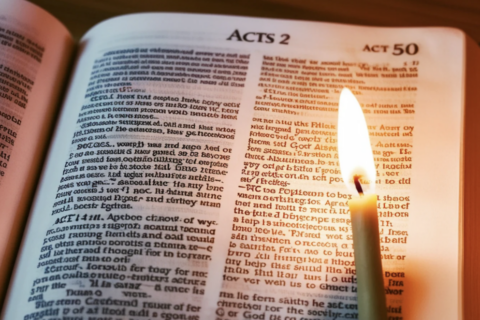
When I asked those questions before, people would respond with Scripture, but the answers always felt like they danced around the issue. The passages they quoted seemed to require extra explanation or had so-called “double meanings.” Somehow, God’s clear commands had to be clarified by man, as if His Word couldn’t speak for itself. That never sat right with me. Peter’s vision in Acts was one of the most common answers. The argument was that God had declared all foods clean. But I just couldn’t make sense of that. Peter himself says, “God has shown me that I should not call any person impure or unclean.” It seemed obvious to me—God was referring to people, not food. Still, the rebuttals kept coming, always with layers: That was just for Israel. That was nailed to the cross. That was cultural. I wasn’t trying to argue—I was just genuinely seeking clarity. If there was a verse that clearly said, “You may now eat these animals,” I would have accepted it. That’s the kind of clarity I was looking for. But there wasn’t one. And the explanations only left me more confused, almost confirming what some say about the Bible contradicting itself. It was frustrating.
Meanwhile, the verses I had read seemed so straightforward: Don’t eat these animals. They’re unclean. Here’s the list. Simple. Uncomplicated. Clear.
I remember now that, for the longest time, it always felt like there was a sense of division whenever someone said, “That scripture was for them, not for us.” Somehow, in my mind, it felt like those verses were a gift that had been given to someone else, but not to me. As if those instructions belonged to another people, another group, and I was somehow left out. And I know it might sound strange, because it was a don’t—“Don’t eat this, don’t touch that”—but I saw it as a gift. A protection. A boundary set by a loving Father. So when I heard people say, “That’s not for us,” it caused something to stir in my heart. It stirred feelings of separation—maybe even jealousy and envy. Why do they get to have that instruction and protection from unclean food, but I don’t? I wanted it too. I wanted that gift for myself.
I longed to own it, to care for it, to treat it as something precious that came directly from my Father. But it felt like I couldn’t have it. Almost like God was saying, “Not yet.” Not unless… or until… He knew I was ready. Ready to protect it, honor it, respect it, and hold it close to my heart.
It was like He had been waiting for me to be ready.
And now… I was.
Until now, no one had affirmed that. But this message—spoken plainly, confidently, and without apology—felt like healing. It confirmed what I had sensed in my spirit all along.
I left feeling lighter. I remember sensing God whisper, “This is why I brought you here.” My heart felt full.
It was honestly a relief to be surrounded by others who took those verses seriously, who didn’t dismiss them as inconvenient or outdated. It gave me peace.
And it made me wonder—with hope and anticipation—what else might the Lord reveal next?
God has a way of answering the questions we’ve held in our hearts for years—sometimes through something as simple as a sermon.
What’s something you’ve quietly wondered about that God answered unexpectedly?
Continue the Journey