
The Sabbath That Became Ours
I had asked a friend about honoring the Sabbath and what the Bible actually says about it. I could only recall a handful of commands: don’t light a fire, don’t work, rest, honor it, and remember it. That was it, as far as I knew. But I wanted to understand how to truly honor the Sabbath—not just in word, but in practice.
That friend gave me a small booklet, or maybe it was a website, where a woman shared how her family observed Sabbath. It was simple, sweet, and deeply intentional. I started doing my own research, quickly discovering that many people honor Sabbath in a variety of ways. While the foundation is scriptural, much of the practices around Sabbath have been shaped by centuries of Jewish traditions.
At first, I was hesitant—especially when I learned that many of these customs came from sources like the Talmud or Mishnah. But as I studied, I found beauty in them.
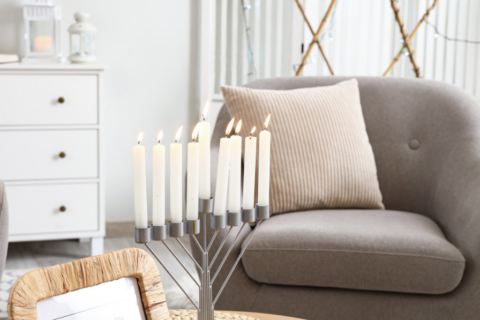
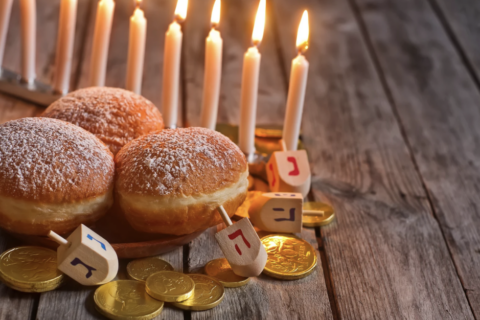
Take the candles, for example. Lighting candles on Sabbath is a tradition carried out by women, and while there are various explanations, one reason stood out to me: the belief that just as the Light of the world came through a woman, so too does the lighting of the Sabbath candles. I loved that symbolism. Some say the two candles represent the beginning and the end, or Yeshua as the Alpha and Omega. Regardless of the origins, I found meaning in it that pointed me to Him.
I even learned a Sabbath song online, memorized it, and modified it to make it my own. Eventually, I wrote a whole little Sabbath booklet—full of traditions, scripture, and blessings that I re-centered around Yeshua. We began using it during our Friday night dinners as a way to structure our time and set the evening apart.
We had tried many things over the years—game nights, worship nights, spontaneous Bible study—but they often ended up feeling unstructured or chaotic. Eventually, we settled on a flow: lighting candles, reading the booklet together, sharing dinner, finishing the last portion of the reading, and closing with dessert. That rhythm brought peace and focus. It was ours.
Along the way, the booklet itself went through several revisions. My husband would share his thoughts and ideas—things he felt would add meaning or depth. I welcomed that, because this wasn’t just my journey; it was ours. But there were moments when even the additions we considered began to feel a little too “religious” to me, almost like we were drifting toward performance instead of purpose.
That realization helped bring me back to the heart of why we started in the first place. We weren’t honoring Sabbath for ourselves—we were doing it for God. The goal wasn’t to create the most beautiful or meaningful experience possible. The goal was simply to set apart time for Him.
And I began to notice something: when we kept Him at the center—without pressure, without striving—the very peace and fulfillment we were hoping for naturally followed.
The blessing wasn’t in the structure itself. It was in the presence of God within it.
Tradition didn’t replace Scripture—it simply gave me a rhythm to remember Him.
Have you ever taken something unfamiliar—like a tradition or practice—and made it your own in a way that honors God?
Continue the Journey
➡ Read Next: How Passover Led Me to Write My Own Haggadah