Why Some Christians Question Easter Traditions
Not long after we began asking questions about Christmas, another holiday came into focus.
Easter.
At first, it felt very similar to the questions we had already wrestled with regarding Christmas. Once again, I found myself asking simple but important questions.
Why do we call it Easter?
Where did the name come from?
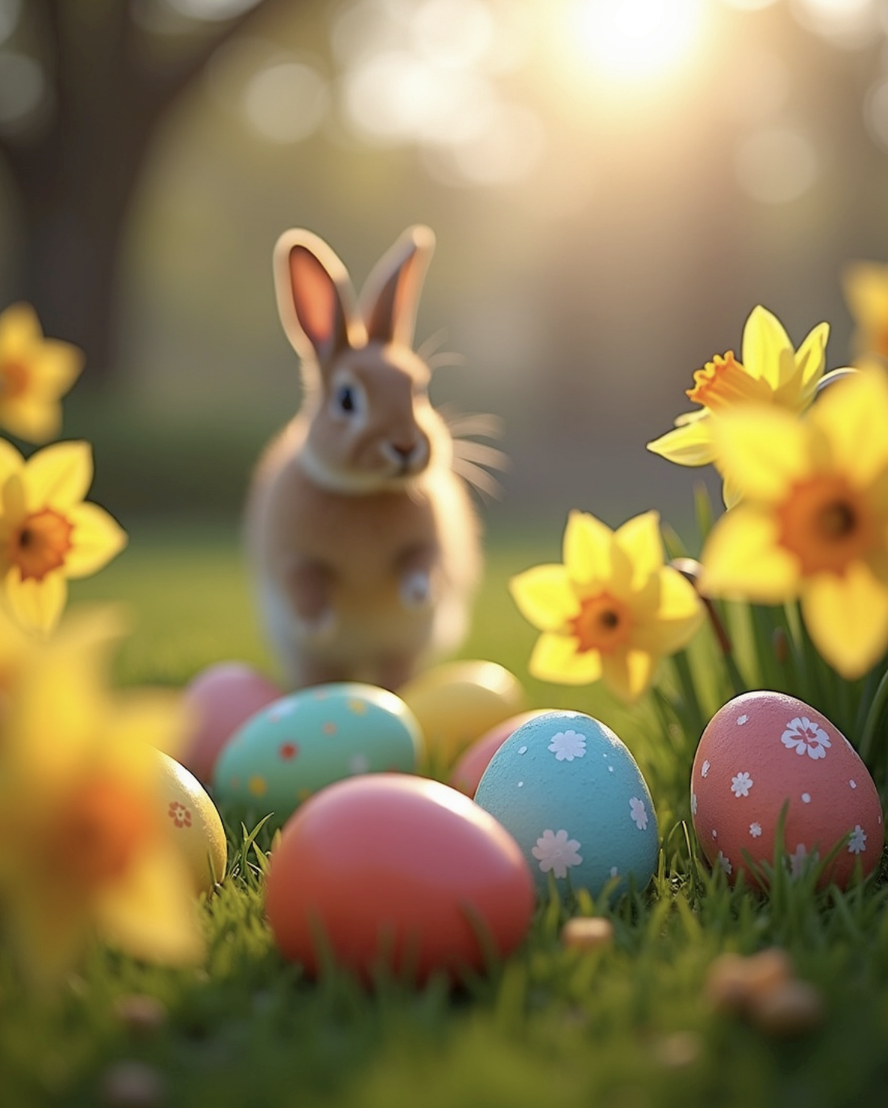
Why the eggs?
Why the bunnies?
Why the baskets and egg hunts?
I began researching the history and traditions surrounding Easter, just like I had done with Christmas. I wanted to understand where these practices came from and how they became connected to our faith.
The deeper I looked, the more things started to feel… out of place.
Many of the traditions associated with Easter—eggs, rabbits, baskets, and egg hunts—didn’t seem to point to Jesus at all. Yet somehow, over time, the celebration had become so closely tied to the resurrection of Jesus that questioning the holiday itself felt almost unthinkable.
Just like Christmas, it seemed that Jesus had been woven into the celebration so deeply that separating the two felt almost impossible.
So when we eventually shared with people that we were no longer going to celebrate Easter, the reactions were strong.
People would say things like:
“How can you not celebrate the resurrection?”
“This is Jesus’ day.”
“For Christians, this is the most important day of the year.”
And I understood why they felt that way.
But what was difficult to explain in a quick conversation was that this decision hadn’t happened overnight.
It wasn’t a sudden change or a rebellious decision.
It was the result of months—and even years—of studying, praying, and slowly processing what we were learning.
God had to be patient with us, because these traditions had been part of our lives for a long time.
They held memories.
Family gatherings.
Picnics in the park.
Children running around searching for hidden eggs.
Candy baskets and laughter.
Those moments were real and meaningful to us.
But when we stepped back and honestly asked ourselves whether the traditions themselves pointed to Jesus, we struggled to find the connection.
Not the eggs.
Not the egg hunts.
Not the bunnies.
Not even the name “Easter.”
Yet Jesus’ name had become so closely attached to the holiday that stepping away from the celebration felt, to many people, like we were stepping away from Him.
But that wasn’t what was happening at all.
We weren’t rejecting the resurrection.
The resurrection of Jesus is central to our faith.
What we were wrestling with was the origin of the celebration itself.
And that realization slowly led us toward a decision we never expected to make.
Continue the Journey
➡ Read Next:Why Our Family Stopped Celebrating Easter