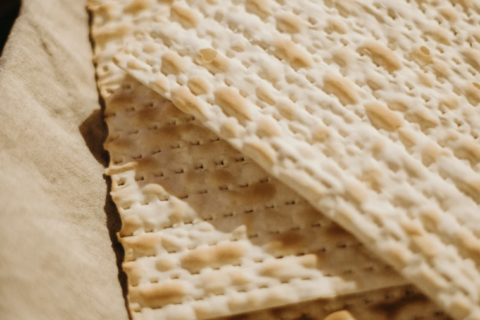

Person studying an open Bible beneath a cream-colored blanket

When Our Faith Began to Look Different to Others

When Convictions Changed Relationships

As I began studying and researching more about the practices we were learning, some relationships outside the synagogue began to feel different—especially with family and friends from our former church. I struggled to explain what we believed God was doing in our lives in a way others could understand. Some comments felt mocking or dismissive, while other conversations revealed that we were all trying to understand one another from very different starting points.

The hardest part was that I wasn’t prepared for those conversations. I couldn’t yet explain the hope and conviction growing in me with the gentleness and respect described in 1 Peter 3:15. Looking back, I can see that patience and careful listening were needed on both sides.

Searching Scripture About Clean and Unclean Foods

It wasn’t about dressing differently. I didn’t wear a head covering or change my style to match others around me. But some things had changed—our mindset, our convictions, and eventually our diet.

After hearing a message about clean and unclean foods, I studied passages such as Leviticus 11 and Deuteronomy 14. These chapters distinguish between animals permitted and not permitted for Israel to eat, including prohibitions involving pigs and aquatic creatures without fins and scales.

I also learned that faithful readers do not all apply these passages in the same way. Christians often consider them alongside Mark 7, Acts 10, and Romans 14, and they reach different conclusions about their application today. Jewish dietary practice is shaped through its own living tradition of Torah interpretation and halakhah, while Messianic communities and individuals also vary in belief and practice.

As I studied, I settled into a deep personal conviction. Our family decided to align our eating with what we believed Scripture was teaching us—not to earn God’s favor, prove a point, or measure anyone else’s faith, but to respond faithfully to what we believed God was asking of us.

Choosing Conviction Without Condemnation

Person studying an open Bible beneath a cream-colored blanketSo yes, we stopped eating pork. No more bacon on our burgers. We gave up shrimp, lobster, oysters, and shellfish ceviche. We were not trying to separate ourselves from people who ate differently. We simply wanted to walk faithfully in the conviction we had reached.

I came to understand that conviction does not require condemnation. I can practice what I believe with sincerity while respecting Christians, Jewish people, and Messianic believers whose beliefs or practices are not identical to mine.

A personal act of obedience may not be understood by everyone, but it can still be practiced with humility, love, and respect.

Have you ever followed a conviction that others didn’t understand? What helped you remain both faithful and gracious?

iamgesher

Watch · Learn · Grow

Faith for the Journey

Explore the latest IAMGesher teachings, practical guides, and short-form encouragement—updated automatically from our YouTube channel.